Table of Contents
Cold outreach remains one of the most demanding disciplines in modern B2B sales. Twenty emails sent. Several calls made. A complete LinkedIn sequence. And a pipeline that isn’t moving.
This scenario is common. But it is not inevitable. In most cases, it reveals less a market problem than a method problem.
The real question is no longer: how do we increase outreach volume?
It becomes: why do some teams close multiple deals from 20 targeted contacts while others struggle to land a single meeting despite hundreds of attempts?
I. Why Cold Outreach Performance Is Declining in 2026

One of the commercial paradoxes of 2026 is straightforward: companies have more prospecting tools than ever, yet many are seeing stagnating, or declining, results.
The explanation is direct. Automation, AI, and data enrichment now allow teams to send more emails, faster, at lower cost. The direct consequence: a sharp increase in competitive noise. B2B decision-makers now receive over one hundred commercial solicitations per week according to several recent industry studies.
The result: nearly every company can reach more prospects, but few actually convert better.
B2B Benchmark Data 2026
Indicator | Observed Result | Strategic Reading |
Average cold email reply rate | 2–6% | High saturation |
Reply rate with advanced personalization | 8–15% | Strong contextual advantage |
Contact → meeting without structured method | 1–5% | Very low conversion |
Contact → meeting with structured sequence | 10–30% | Significant gains |
Meeting → deal | 15–25% | Discovery is decisive |
Touchpoints before reply | 5–8 | Persistence is necessary |
These figures tell a counterintuitive story: the gap between ineffective and high-performing cold outreach rarely comes from volume sent.
It comes from four variables: ICP precision, buying signal detection, message relevance, and follow-up discipline.
II. The Underestimated Factor: Longer B2B Buying Cycles
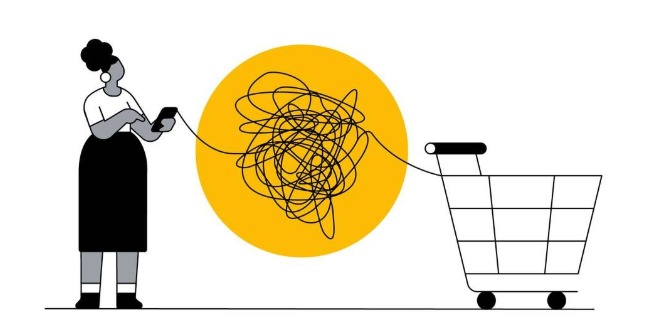
Another transformation directly impacts performance: the growing complexity of B2B purchase decisions.
Closing a deal now requires more internal validation, budget approval, operational risk assessment, tech compatibility, expected ROI. In many organizations, multiple stakeholders are involved before final sign-off.
Observed Cycle Lengths by Sector
Sector | Contact → Meeting | Meeting → Deal | Average Cycle |
B2B SaaS (< 100 employees) | 18–28% | 18–25% | 45–75 days |
Professional services | 12–20% | 15–22% | 60–120 days |
Industry / Manufacturing | 8–14% | 10–18% | 90–180 days |
In this context, abandoning a sequence after a few days often means dropping out of the cycle before the decision process has even truly begun.
Why Cold Outreach Still Fails: Four Structural Causes
1. No Formalized ICP
Most companies believe they have precise targeting when they are actually working with broad categories: SMBs, industry, SaaS, HR. These are not ICPs.
An actionable ICP includes far more specific variables: organizational maturity, economic context, recent signals, decision-making structure, budget capacity.
In several analyzed B2B SaaS cases, deliberately reducing outreach volume after formalizing an ICP significantly multiplied qualified meeting rates. Moving from 80 approximate contacts to 20 highly targeted ones sometimes improves results more than any additional tooling.
The problem is not always a shortage of prospects. The problem can be an excess of the wrong ones.
2. Messaging Still Centered on the Offer
Most commercial approaches still open with: “Hi, we help companies with…”
For the prospect, this structure immediately triggers a silent question: Why me? Why now?
High-performing messages reverse this logic. They start from an observable context: recent hiring, expansion, fundraising, internal transformation, regulatory pressure. Effective cold outreach rarely leads with the solution. It leads with the problem the prospect may already be experiencing.
3. Sequences Abandoned Too Early
Many teams give up after one or two attempts. Yet a significant portion of replies appear after 5 to 8 touchpoints, not because the prospect was opposed, but because they were busy, unsynchronized, or simply not yet ready.
Follow-up is therefore less an act of persistence than a statistical condition of conversion, provided each interaction adds genuine new value.
4. Deferred Prospects Remain Underutilized
The message “Not now” is often interpreted as “Never.” This reading loses a significant number of future opportunities.
A deferred prospect already has several valuable characteristics: initial interest, partial qualification, and problem awareness. Organizations that structure light nurturing over 90 to 180 days frequently recover a meaningful share of additional opportunities at reduced acquisition cost.
IV. The SIGNAL Framework: Converting 20 Contacts into 5 Deals

Analysis of recent B2B commercial cycles consistently identifies six recurring levers among the highest-converting teams.
Step | Function | Concrete Action |
S . Sélection | Strict ICP targeting | Limit to profiles with recent buying signals and decision-making authority |
I . Insight | Contextual messaging | Start from an observation, not a product presentation |
G. Go multicanal | Contact ecosystem | Email + LinkedIn + call + content as a coordinated sequence |
N . Nurture | Deferred replies | Treat “not now” responses as 90–180 day future opportunities |
A . Approach | Discovery quality | Turn a conversation into a real opportunity through the right questions |
L . Leverage | Rigorous pipeline | Every deal with a dated next step and a precise objective |
That last point deserves particular attention. A deal without a dated next step isn’t active: it is dying slowly in your CRM. The fix is simple, replacing “I’ll follow up at the end of the week” with “20 min Tuesday 10:30am, recap on [X], decision on [Y]. Does that work for you?” The percentage of deals with a dated next step per pipeline stage tells you more about your pipeline’s actual health than any cumulative amount. Read this analysis on LinkedIn.
Retain Your Key Clients
Work with our Finelis Team
V. Cold Outreach 2027: What Will Separate the Winners
Three evolutions are already visible.
AI as a prioritization tool, not a volume tool. Its role appears less oriented toward mass automation than toward identifying buying signals. Identifying the twenty most relevant contacts of the week becomes more valuable than increasing raw volume.
Social selling as a long-term asset. The expert presence of salespeople on LinkedIn is becoming a lever that progressively reduces the cost of acquiring cold leads. A prospect who already knows you responds differently to a first message.
Continuous training as a durable advantage. Organizations that invest consistently in qualification, discovery, and commercial posture maintain a more stable edge than those investing only in tooling. This is precisely the focus of Finelis Coaching: improving execution quality before scaling volume.
“Une entreprise B2B augmente de 15 % ses renouvellements en envoyant simplement des notes personnalisées avec des recommandations stratégiques pour l’année suivante.”
Conclusion

Closing multiple deals from a limited number of contacts is not a universal norm. It can, however, become a repeatable outcome when several variables work in concert: targeting, buying signals, sequences, nurturing, discovery, and commercial discipline.
The gaps observed between organizations come less from the market than from the method.
The question to ask yourself may no longer be: How many prospects are you reaching out to each week?
But rather: How many of them actually should have been contacted?
To go further, explore how to build a sales pipeline that holds up through long decision cycles.
FAQ
Benchmarks consistently show contact → meeting conversions between 1% and 5% without a structured method, versus 10% to 30% with a precise ICP and a coordinated multichannel sequence.
High-performing sequences typically include 5 to 8 touchpoints spread over several weeks, each delivering a new element of value rather than simple repetition.
Failures most often stem from insufficient ICP targeting, offer-centric messaging that ignores prospect context, and premature abandonment of follow-up sequences.
Measure the percentage of active deals with a dated next step and a specific objective. This rate reveals true pipeline health far more accurately than any cumulative deal amount.
When outreach volume increases but conversion rates remain flat, or when cycles are lengthening without a clear diagnosis, an external perspective typically identifies untapped levers quickly.