

Table of Contents
LinkedIn outbound has not failed. The indiscriminate approach has. In 2026, the organizations that perform have made a decisive shift: replacing broadcast logic with targeted conversation logic. The concrete result for those who made this choice: sales cycles cut in half, decision-makers who actually respond, and pipelines built on solid relationships rather than ephemeral volume.
1. The New B2B Paradigm: Beyond Volume
The LinkedIn ecosystem has changed profoundly. Anti-spam filters have become drastically more aggressive, decision-makers have developed total immunity to automated sequences, and as a result, mass outreach campaigns now display response rates close to zero.
Current market data leaves no room for interpretation:
Performance Indicator | Mass Approach | Ultra-Personalized Approach (2026) |
Message open rate | Less than 15% | More than 65% |
Qualified response rate | 1.2% | 18.5% |
Commercial decision cycle | 90 to 120 days | 45 to 60 days |
This shift is driven by two converging pressures. On one side, algorithms immediately detect and penalize robotic behaviors. On the other, the cognitive overload of senior executives demands immediate clarity: if your message does not deliver sector-specific value in the first line, it is ignored.
A question every commercial leader must ask: are your teams generating noise, or initiating genuine business conversations?
2. Why Traditional Approaches Fail Structurally
Most teams do not lack tools. They lack posture. LinkedIn is still too often treated as a broadcast channel, when it functions as a peer-to-peer relationship space.
Three mistakes account for the vast majority of failures:
- Delegating to automation what should reflect human intelligence and judgment
- Pitching too early, before understanding the prospect's real context and priorities
- Ignoring financial or sector news relevant to the target company
A decision-maker evaluates the credibility of an outreach contact in under five seconds. By contrast, a contextualized and personalized approach immediately creates space for dialogue. That is why high-performing organizations are investing in transforming their sales teams into strategic advisors, not vendors.
3. LinkedIn Outbound 2026: The Concrete Tactics That Convert
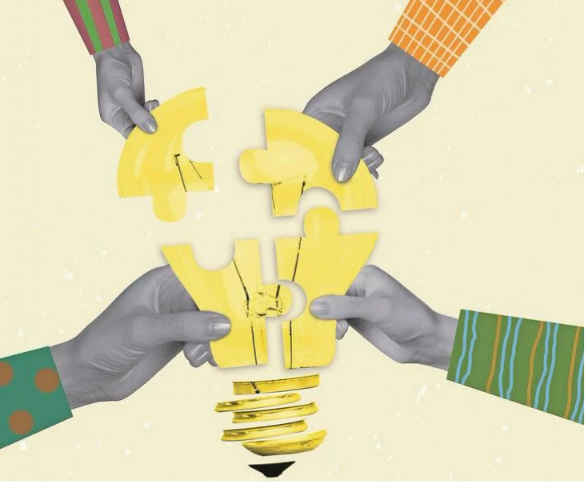
Three pillars separate the teams that close deals from those that flood inboxes.
Account-Based Engagement (ABE)
Fewer targets, but exhaustive preparation. Annual reports, public speeches, sector challenges: the quality of pre-contact research directly determines the quality of the conversation. A well-understood prospect responds. A poorly targeted one ignores.
Information Triangulation
Connecting a weak market signal to a concrete operational consequence for your contact. A new regulation, a competitive move, margin pressure: all natural entry points that effectively replace the product pitch.
Market signal → Operational impact → Opening for discussion
Collaborative Content as an Entry Point
Inviting a prospect to contribute to a roundtable or sector study rather than a product demonstration. This posture values their expertise, builds a relationship free of immediate commercial pressure, and naturally shortens the trust cycle.
The real question is therefore not whether these mechanics work. It is whether your teams are structured to apply them consistently, every day.
4. What Leaders Are Already Doing
The organizations that will dominate tomorrow are not waiting for 2027. They are already operating three structural shifts:
- Assumed professional visibility: buyers will only engage with profiles demonstrating proven expertise, not just a job title
- Closed networks as a priority channel: peer introductions are progressively replacing cold outreach to access strategic accounts
- Co-construction over closing: the sales process becomes a shared value creation journey
These evolutions are directly linked to how you structure your professional networks today. On this point, our analysis High-Level Networking: How Strategic Networks Transform Commercial Growth provides concrete benchmarks to anticipate these shifts.
Conclusion

The success of a LinkedIn outbound strategy in 2026 no longer depends on the power of your automation tools. It depends on the relevance of your business posture and the quality of your interactions. Precision, contextualization and advisory posture: these are the three standards that now separate the teams that close from those that clutter inboxes.
To calibrate your approach against these new performance standards, the experts at Finelis Coaching support commercial leadership teams through this transformation.
FAQ
Follow-up should not be driven by a fixed schedule, but by the emergence of a new high-value contextual element. Two to three interactions spaced roughly ten days apart, based on relevant business insights, represent an effective standard.
Message volume is no longer a reliable indicator. Prioritize measuring the qualified response rate generating genuine strategic discussion, as well as the average value of opportunities created in your CRM.
AI is valuable for analyzing market data and synthesizing weak signals from a target account. However, the final message must retain a human tone, unique and adapted to the specific nuances of each contact.